

The PWWA

Who We Are
Established in 1994, the Pacific Whale Watch Association (PWWA) is a community of ecotourism professionals with a shared commitment to education, conservation, and responsible wildlife viewing in Washington State and British Columbia. With 28 member companies departing from 24 different locations in Washington State and British Columbia, our skilled operators are able to educate and inspire nearly 400,000 visitors per year.
From zodiacs to catamarans, sailboats to sea kayaks, the PWWA has something for everyone. No matter which company you choose, all members of the PWWA have a great respect for the Pacific Northwest and its wildlife. Few experiences compare to seeing whales in the wild, and few destinations offer the variety and abundance of the Salish Sea, a place where whales are seen consistently throughout the year.
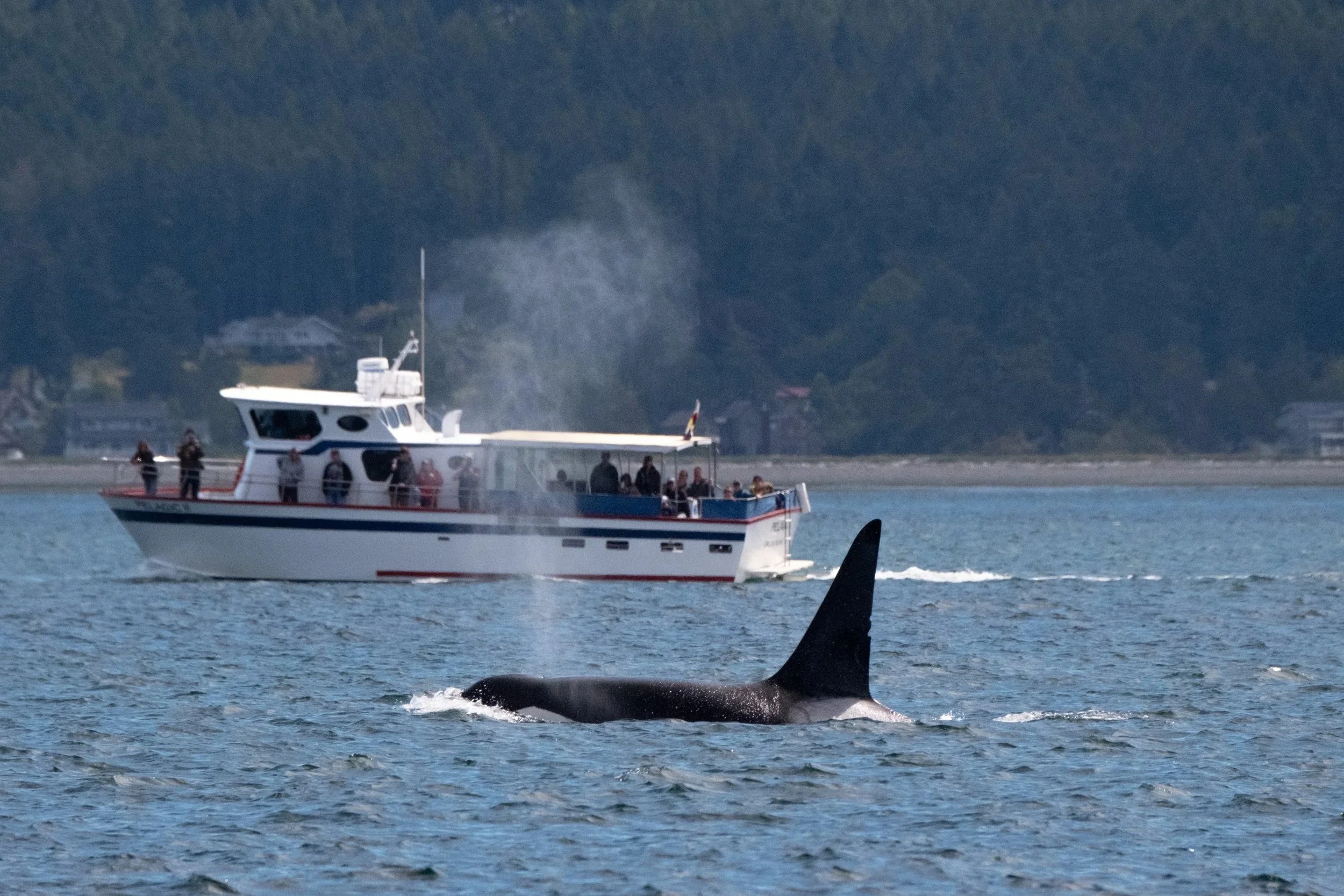
A PWWA vessel views a Bigg’s killer whales. Bethany Shimasaki, Western Prince
History
Prior to the early 1990s, there were only a few professional whale watch operators in Washington and British Columbia. At that time, tours focused almost exclusively on fish-eating Southern Resident killer whales. That all changed, however, with the release of the movie Free Willy in 1993. The summer blockbuster about a captive whale’s return to the ocean inspired thousands of visitors to flock to the Salish Sea where several of the movie’s scenes were filmed. Whale watch boats could hardly keep up with the new demand, and dive and fishing charter boats also started taking passengers out to view whales in the wild.
As the professional whale watching industry grew, several local operators banded together in 1994 to form the Pacific Whale Watch Association (originally Whale Watch Operators Association Northwest) to develop voluntary whale and wildlife viewing guidelines in Washington and British Columbia, long before they were required by law. Some examples of these early guidelines included slow approach and departure speeds, precautionary viewing distances, and a voluntary sanctuary zone along the west side of San Juan Island where Southern Resident killer whales are known to forage.

Whale watchers viewing a Bigg’s killer whale from a distance. Photo: Julia Michel, White Rock Sea Tours
Evolution
Now, decades later, the PWWA has become a model for collaborative, sustainable ecotourism not just regionally, but around the world. Many of the laws in place today are based on the guidelines first implemented by the PWWA. Others have evolved as our understanding of whale behavior grows.
The types of whales viewed on PWWA tours has also changed over the decades. PWWA tours no longer focus on Southern Resident killer whales, which were listed as endangered in 2005. Instead, our tours primarily view the thriving Bigg’s (mammal-hunting) killer whale and humpback whale populations. Gray whales, minke whales, and Northern Resident killer whales can also be seen seasonally.
Today, the PWWA spends much of our time working to create safer conditions for the whales we know and love. We strive to model proper boating behavior around whales for other vessels, and we warn other vessels when whales are present so they can slow down and alter course. We contribute toward cetacean research, prioritize education and conservation, and are heavily involved in wildlife advocacy. The PWWA continues to evolve, but our commitment to the animals has remained constant for more than 30 years.