

Regulations & Guidelines
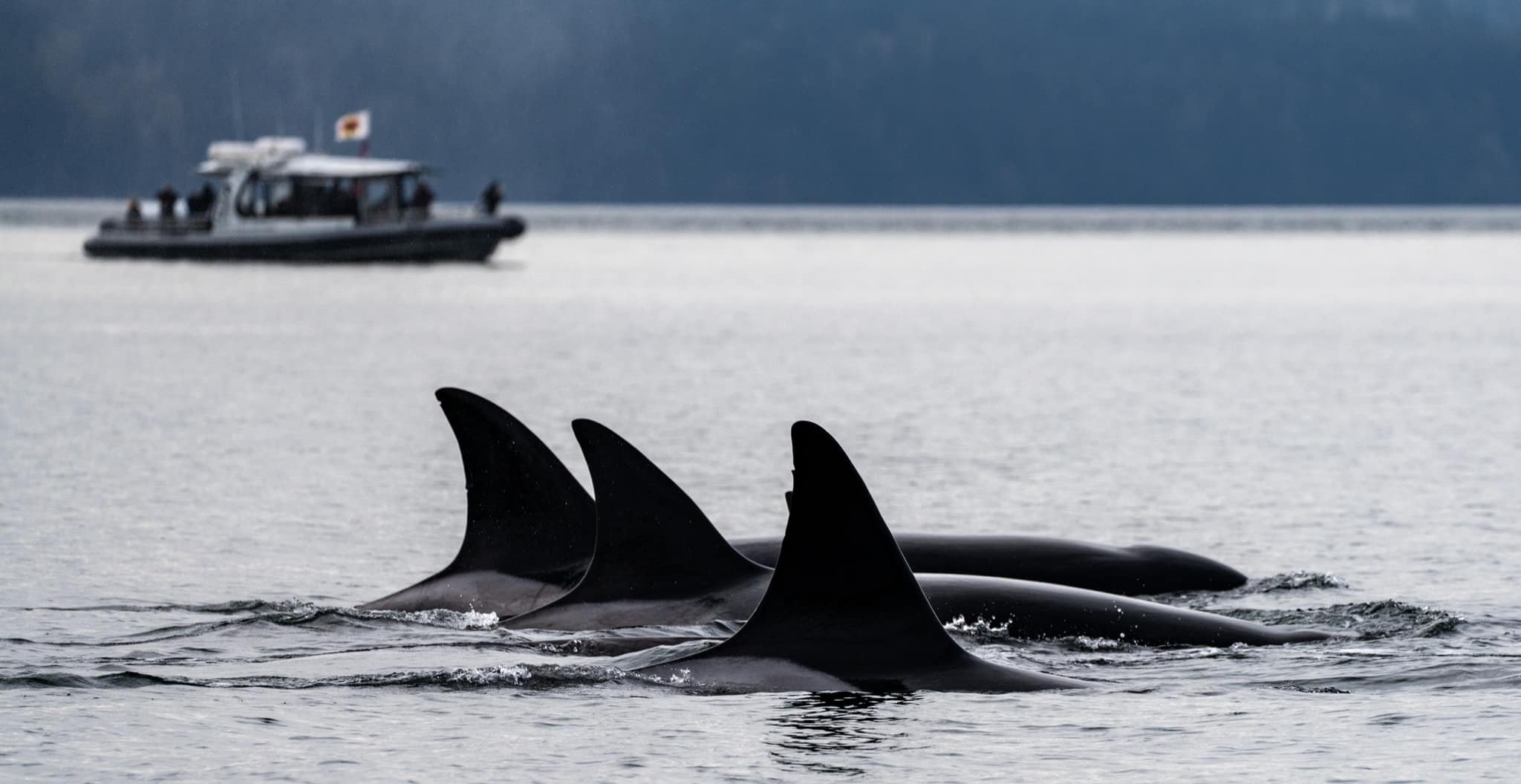
A PWWA vessel views whales at a slow speed from a safe distance and displays the Whale Warning Flag. Photo: Sara Shimazu, Maya’s Legacy Whale Watching
Not all whale watching is created equal. Many destinations around the globe offer few if any protections to the whales being viewed.
Fortunately, the rules for watching whales in Washington and British Columbia are some of the most precautionary in the world. Many of today’s marine mammal viewing laws were crafted with input from the PWWA. These rules, and our additional PWWA guidelines, have evolved over time as we learn more about whales and their behavior.
Viewing Distances
Vessels in both Washington and British Columbia must abide by mandatory approach distance regulations. We do not intentionally approach whales closer than these distances. While unintentional close encounters sometimes occur, you should not expect them on your tour. If you’re a photographer, we recommend bringing a telephoto lens to best capture photos during your PWWA wildlife encounter.
Most Whales

Credit: NOAA
The viewing distance for most whales is 100 yards in Washington and 100 metres in British Columbia. This includes the humpback whales, gray whales, and minke whales that we encounter frequently on PWWA tours.
In British Columbia, the viewing distance for any whales who are resting or with calves is 200 metres.
KILLER WHALES (ORCAS)

Credit: NOAA
The viewing distance for Bigg’s (mammal-hunting) killer whales and Northern Resident (fish-eating) killer whales in Washington and BC waters is 200 yards/metres.
Due to their endangered status, the approach distance for Southern Resident killer whales is 1,000 yards/metres. When in doubt, boaters should treat all killer whales as endangered Southern Residents.
PWWA tours do not focus on Southern Resident killer whales, and you should not expect to see them from our vessels.
Reduced Speed

A PWWA vessel views Bigg’s killer whales from a safe distance. Photo: All Aboard Sailing
Scientific studies show that speed is the most important factor in determining how much sound a vessel generates underwater. PWWA operators practice parallel viewing at slow speeds from safe distances so as not to disturb the whales’ natural behaviors. Through these respectful whale watching practices, we are rewarded with the ability to witness whales feeding, playing, resting, and mating in their natural habitat.
In Washington state, vessels may not travel at a speed of 7-knots or less within 1 kilometer of endangered Southern Resident killer whales. While this law applies only to Southern Residents in Washington waters, the PWWA promotes a 7-knot or less speed buffer around all whales in both Washington and British Columbia.
Additional Laws & Guidelines
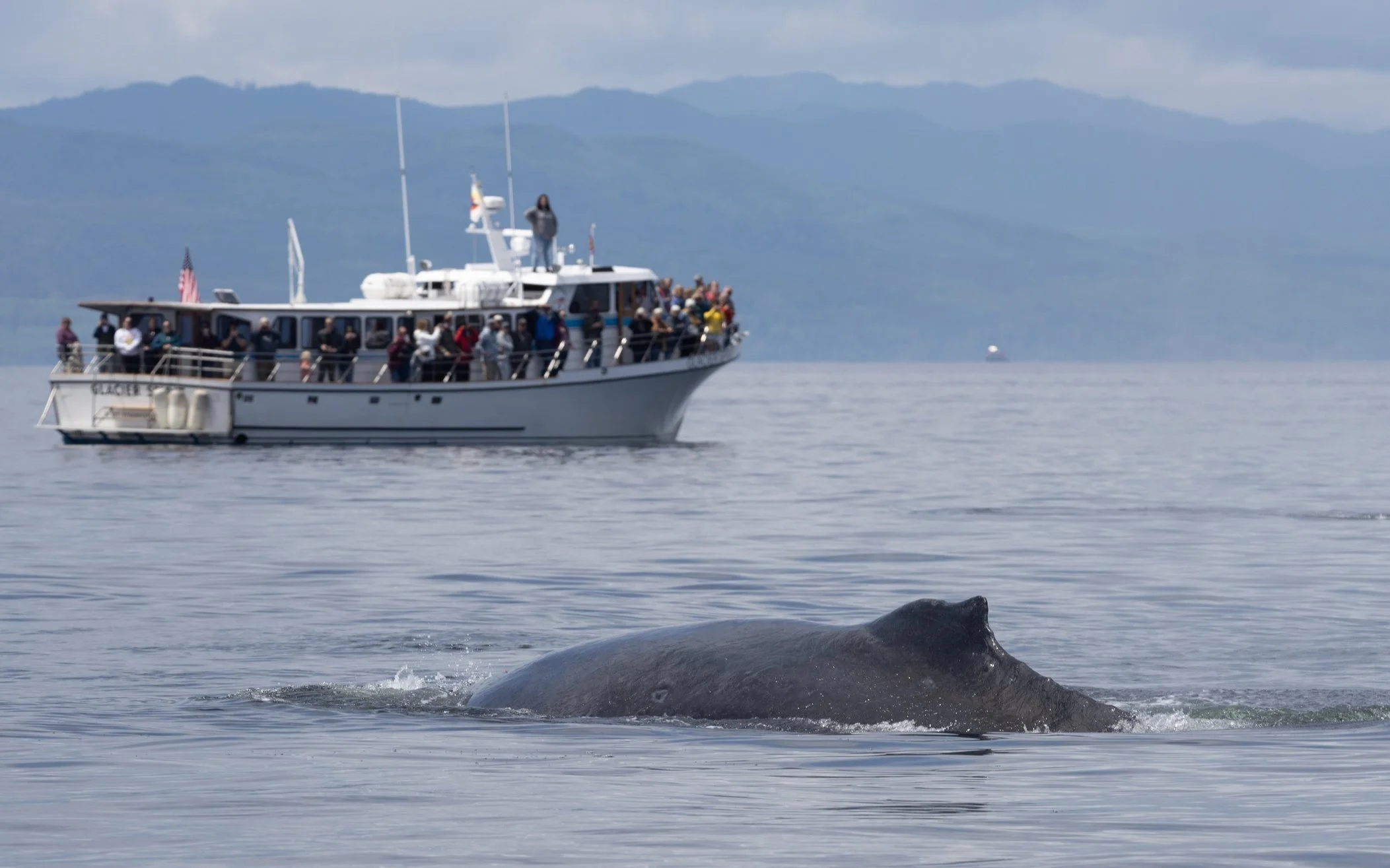
A PWWA vessel views a humpback whale from a distance. Photo: Mollie Cameron, Sooke Coastal Explorations
PWWA captains receive annual training on marine mammal regulations and are specifically licensed as commercial whale watching operators. Each PWWA vessel is also required to have an Automatic Identification System (AIS) installed and transmitting during tours, providing full transparency about our whale watching activity.
In addition to following all local, state, provincial, and federal laws regarding the viewing of marine mammals, Pacific Whale Watch Association operators also adhere to additional best practices to ensure an optimal experience for our guests and the wildlife that we view. These best practices include open internal communication, prioritization of data collection and sharing, vessel count monitoring, and more.
Not all whale watch companies in our operating region are members of the PWWA. By booking a tour with a PWWA company, you can be confident you’re choosing an operator who is familiar with the region’s whale watching regulations and prioritizes the health of local whales and other wildlife.