Southern Resident Killer Whales
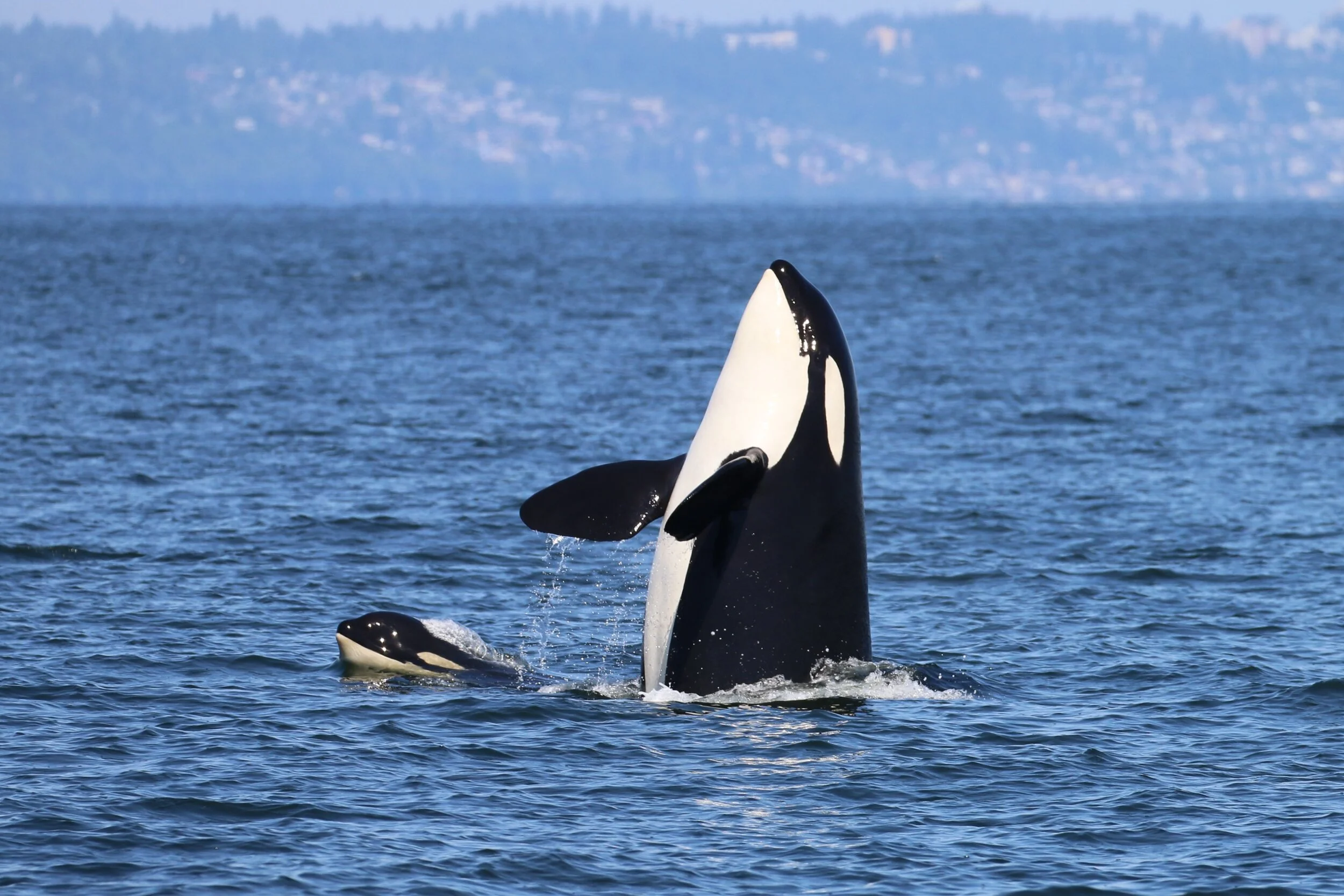
Killer whales, also known as orcas, can be found in all the world’s oceans. Over time, killer whales have evolved and adapted to eat different prey items. Southern Resident killer whales range from central California to Southeast Alaska and feed primarily on salmon, especially Chinook salmon. Their customs and language are different from any other population of killer whales on the planet. Sadly, Southern Resident killer whales are currently endangered, and they desperately need our help.
PWWA tours do not focus on Southern Resident killer whales, but it’s important for us that they not be out of sight, out of mind. Read on to learn more about this endangered population and what you can do to help.
An Endangered Population
Southern Resident killer whales have faced many challenges in recent decades including a decline in prey, exposure to pollution, increased underwater sound, and captures by the aquarium trade. Despite being listed as an endangered population in 2005, and much work being done to address their key threats, Southern Resident killer whales have still not recovered. As of August 2025, there were just ~74 individuals in the J, K, and L Pods who make up the Southern Resident population.
Shrinking Salmon

An 85-pound “June Hog” Chinook salmon caught in 1925. Photo: Columbia River Maritime Museum
The Salish Sea salmon situation is complicated, but research shows Southern Resident killer whales aren’t getting enough to eat, making it difficult for their population to reproduce successfully.
One problem is that many of the Pacific Northwest salmon runs on which Southern Resident killer whales rely are also endangered. In years of low salmon abundance, Southern Resident mortality is higher. In addition to there being fewer salmon, the salmon available to Southern Residents today are much smaller than they were historically. Southern Residents have to work harder to meet their caloric needs, and they often come up short.
Bigg’s (transient) killer whales inhabit the same waters as their distant Southern Resident cousins and are exposed to the same vessel traffic, underwater noise, and chemical pollution. Their population, however, is thriving because they feed on marine mammals like seals, sea lions, and porpoises, all of which are abundant in Washington and BC. Their success provides hope that Southern Residents can also thrive if recovery of their main food source, Chinook salmon, is made a priority.
How Can I help?
Saving the Southern Residents will be no easy feat, but there are actions you can take, no matter who you are or where you live, to help with their recovery.
Spread the worD
Help spread the word about Southern Resident killer whales to others. Here are some of our favorite resources to share:
Volunteer

Photo: USFWS
Local to the Salish Sea? Visit www.podmatch.orgto get connected with volunteer opportunities in your community. Roll up your sleeves and help whales by participating in activities that restore important salmon habitat, like planting trees or cleaning up beaches. More salmon habitat means more salmon for Southern Resident killer whales.
Not a local? Not a problem! Seek out similar activities that help the environment in your own neighborhood - or you can even plan your own.
Start small
There are little things we can do every day that will benefit the environment in the long run. Simple changes, like using reusable water bottles and shopping bags or only buying non-toxic cleaning products can make a dramatic difference over time if everyone takes part. Click here for tips on things you can do around your home to help Southern Residents.
Donate
A little can go a long way, and even the smallest financial donation can make a difference. There are far too many organizations working toward protecting salmon, Southern Residents, and the broader Salish Sea ecosystem to list them all here, but here are a few recommendations to get you started.